Philips ⋅ 2024 ⋅ Bangalore ⋅ Digital Health / Preventive Healthcare
Redesigning a preventive heart‑health experience for clarity and trust
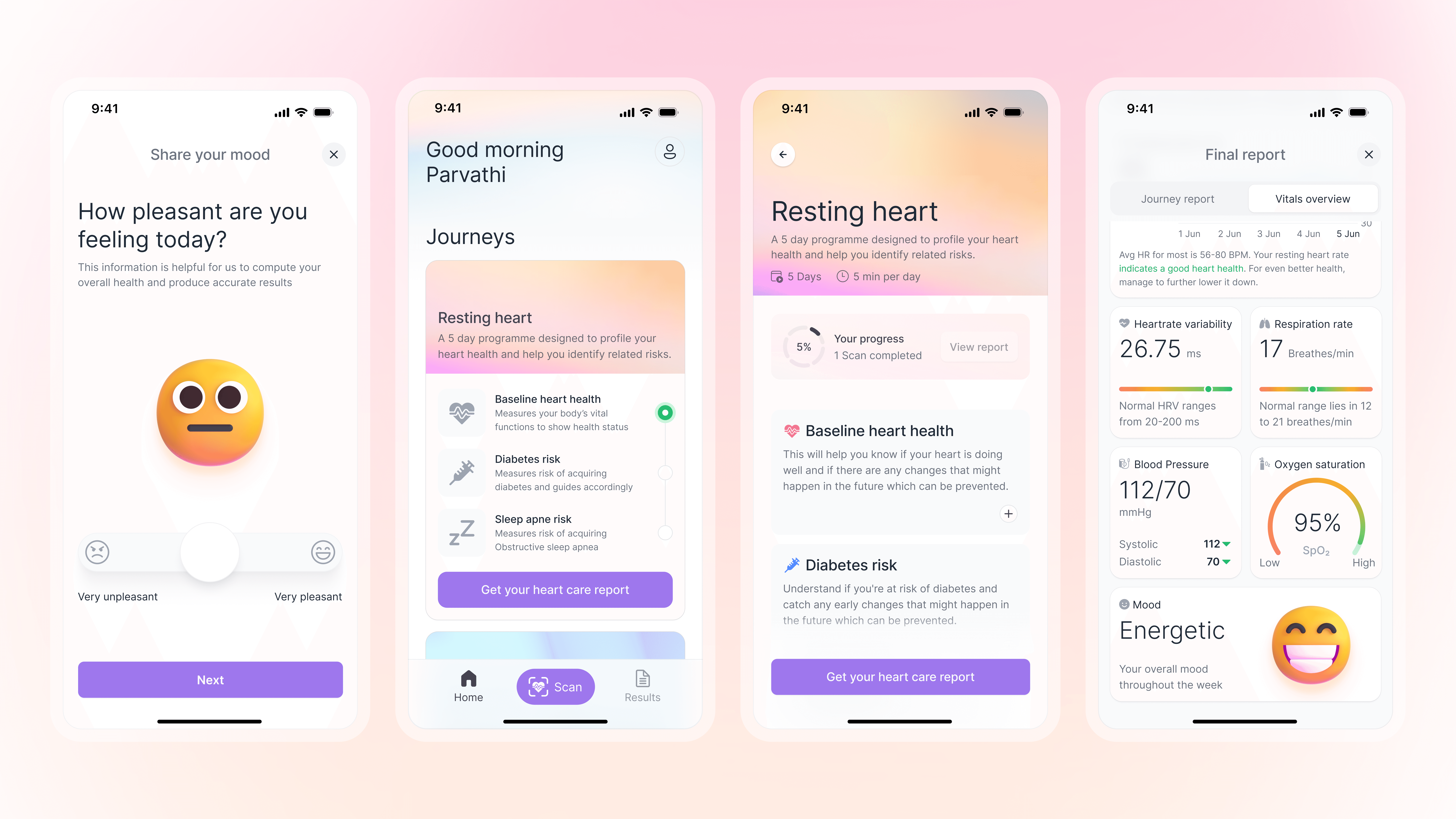
Role
Product Designer
Timeline
3 Months
Team
Design Manager, UX Researcher
Responsibilities
End-to-end UX & UI Design Process
Context
Philips HeartPrint is a preventive heart‑health platform designed to help everyday users track vitals and understand cardiovascular risk through non‑invasive scans.
*This project was done in collaboration with Ownpath, a design studio based out of Bangalore, India.
PROBLEM
The existing experience struggled to support first‑time users effectively
Users didn’t know where to start after logging in the app
Heath scanning instructions were unclear and anxiety‑inducing
Results lacked context, making it hard to interpret health markers
This created confusion, hesitation, and lack of trust, across the whole user journey. These are critical failures in a healthcare product.
WHAT WE DID
Under 3 months, we synthesized research findings to redesign the app for orientation and guidance in uncertainty
We learned the app wasn’t failing due to it’s features, it was breaking under lack of guidance during critical health moments.

Audited user journeys step‑by‑step
Across onboarding, scan initiation, results, and questionnaires

Benchmarked related apps
To understand how clarity, trust, and guidance are handled at scale

Synthesized research findings
Using journey maps, personas, and UX research insights
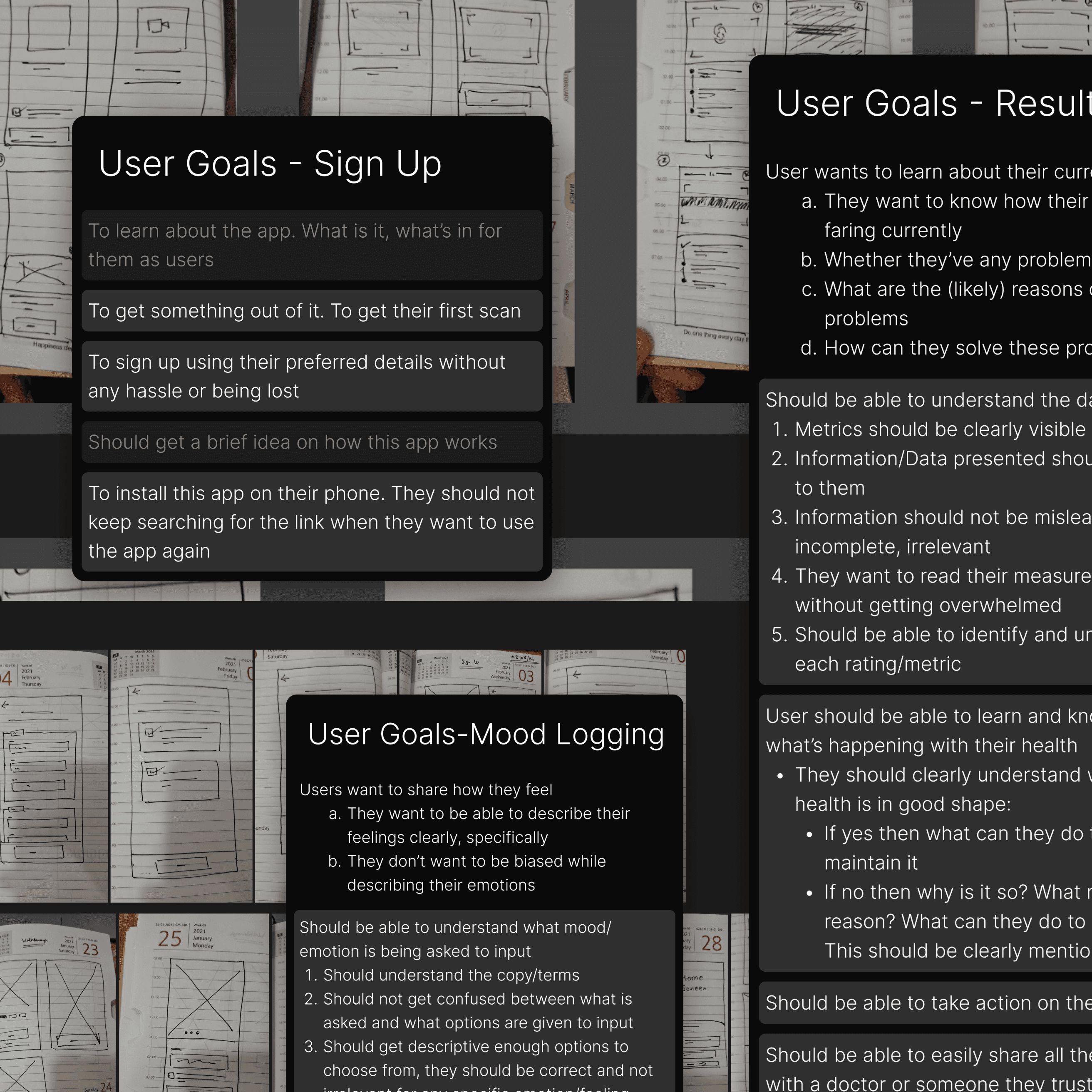
Made user goals for key flows
Prioritizing clarity, confidence, and next‑step guidance in key flows
To address these UX gaps, we focused on:
Restructuring journeys for clarity
Designing guided, step‑by‑step flows
Using UI and copy as trust signals
SOLUTION
First we tackled the onboarding to educate users and guide them to their first scan, without signing them up
First Time User Experience (Onboarding + First Scan)

High-level onboarding flow
Once we got the user in, we had them start a major journey to asses their vitals in 5 days
User's 5 day journey to check their heart and health vitals
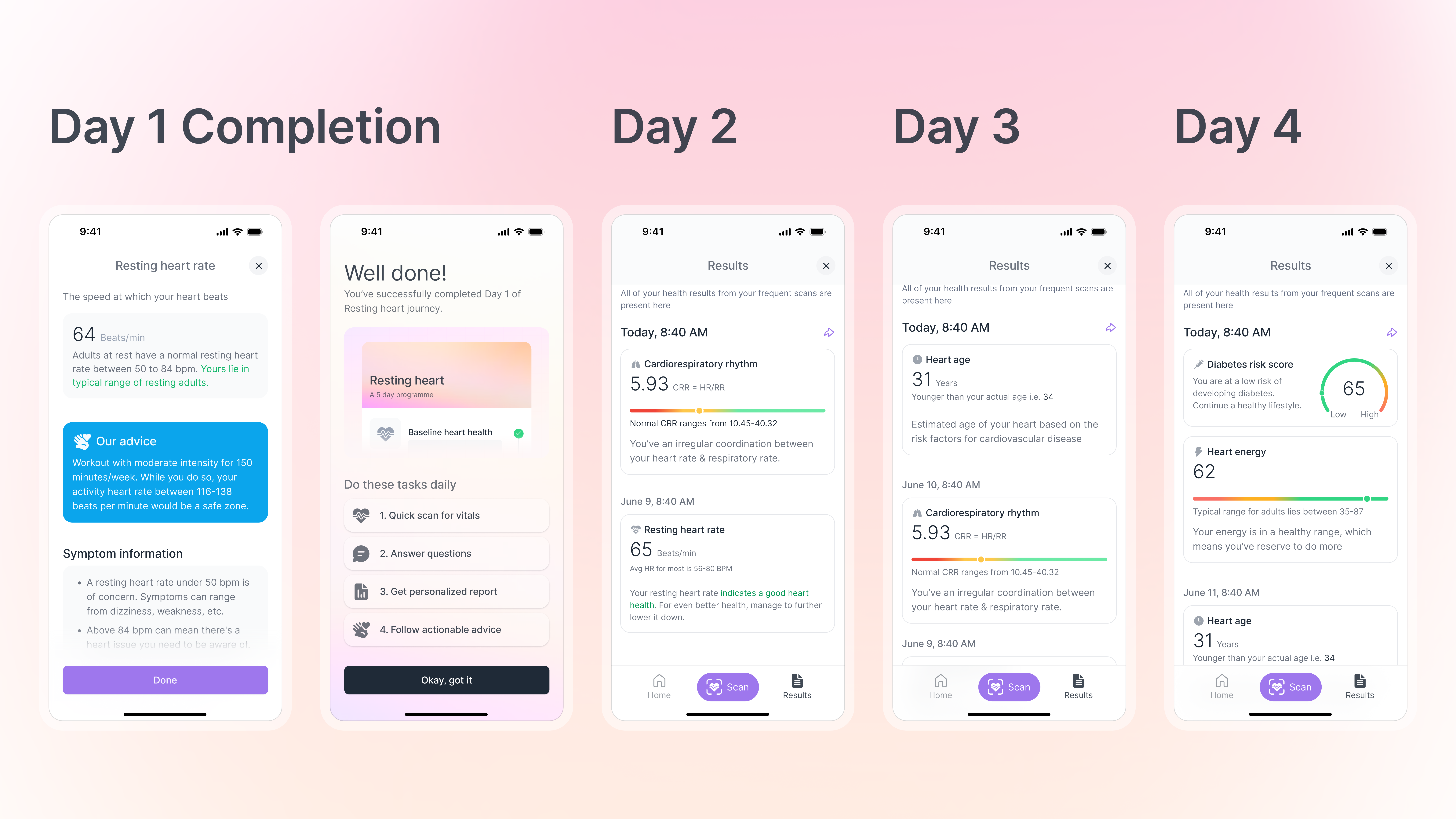
High-level journey touchpoints
At the end of their journey, we presented an overview of their body’s vital signatures across 5 days of scanning
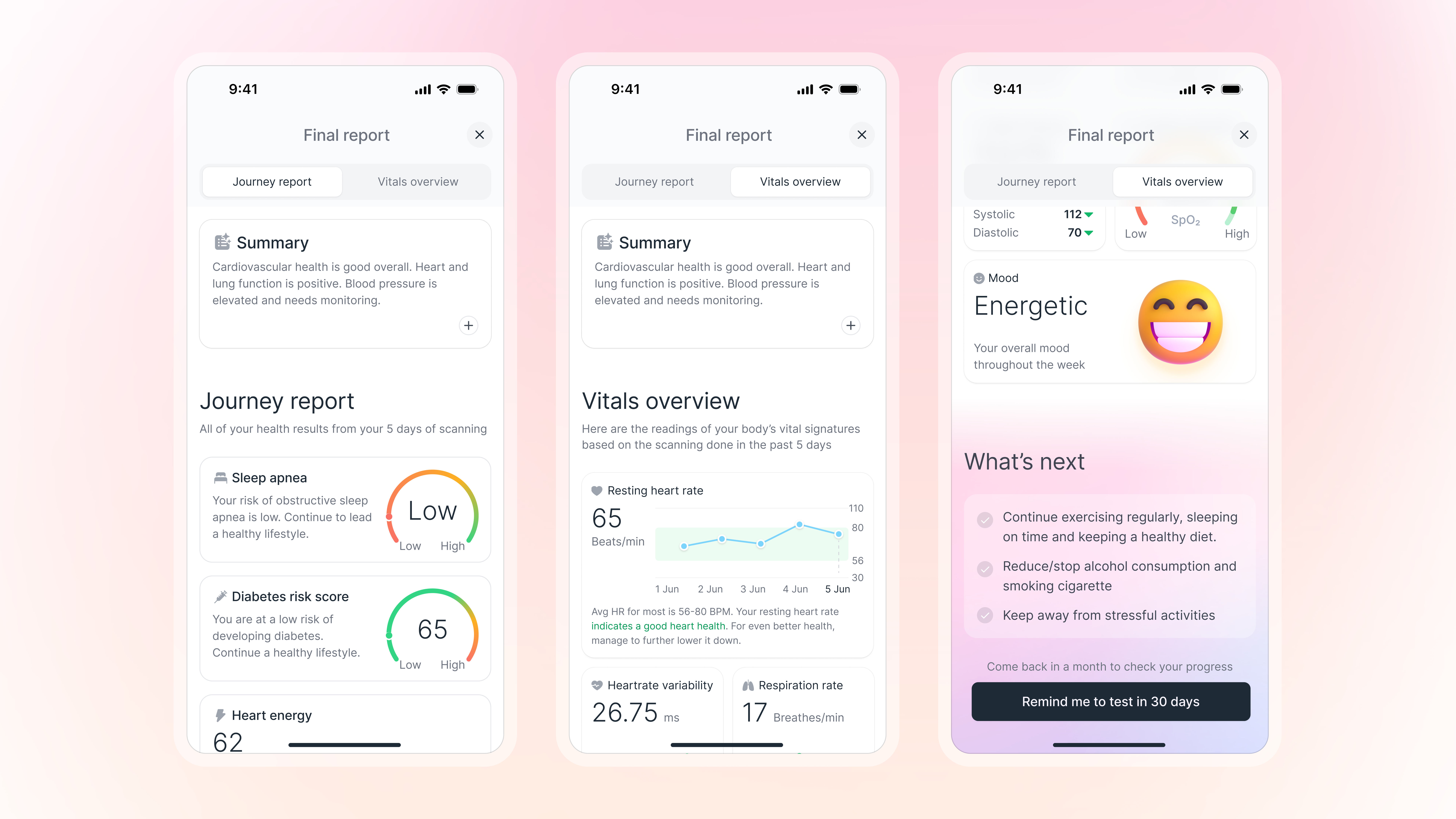
Journey results
CONCLUSION
Expected impact based on research & UX benchmarks:
~15–25%
Reduced first‑session abandonment
~20–30%
Lower cognitive load during key journeys
~10–15%
Increase in scan‑completion
~10–20%
Better result comprehension
Impact estimates are directional and based on UX research insights, comparable health‑tech patterns, and internal design reviews. The MVP was not shipped to production.